
Tracing Bedford County Former Owners
Each former owner in Bedford County emerges from one recorded transfer at a time. Start with the newest deed. Its grantee is your anchor. Identify the grantor, then search that name as grantee in an earlier deed. That search yields the prior owner of record. Repeat until the chain runs out. Courthouse land records date to 1754, and historical repositories hold books and indexes from overlapping periods, so ask the Clerk where the online records stop rather than assuming an older deed never existed.
| Source | Years It Covers | Where Held | What It Shows |
|---|---|---|---|
| Current Clerk index | Current books at courthouse from 1754; online cutoff not stated | Circuit Court Clerk / remote vendor | Grantor, grantee and instrument reference. |
| Deed books and indexes | Books 1754-1902; general indexes through 1930 in the LVA listing | Courthouse and Library of Virginia microfilm | Earlier transfers and book/page links. |
| FamilySearch reels | Books 1754-1901; indexes 1754-1929 | Catalog and participating access points | Index first, then the matching deed book. |
| Local collections | Holdings vary by record group | Bedford Public Library and Museum | Deeds, wills, newspapers, surveys and family context. |
For recent transfers, use the current Clerk index. For earlier years, move to the old index and deed books. The Library of Virginia supplies a microfilm finding aid. Bedford Public Library and the local museum add context. Keep directories and tax lists in their place; age alone never makes them a substitute for the deed itself.
Start with a Bedford County Deed
The current parcel points to the latest recorded conveyance. Search the current owner as grantee and note the book and page, or instrument number. Read the grantor and legal description in the recorded image. That grantor is your earlier link. Search the name as grantee to find the prior deed. Then repeat the climb. This backward chain is not a full title search, and each step must describe the same land.
Log every transfer in a table with the date, grantor, grantee, instrument type and reference. A nearby address never fills a gap. Rural deeds may name a tract by acreage, creek, road or adjoining owner, while town parcels use lot and block terms, so compare wording across transfers. Parcels get split, combined or redescribed.
Bedford County Deed Books on Film
Bedford County's older deeds live in more than one place. Courthouse originals, Library of Virginia microfilm, the FamilySearch catalog and local collections each hold a share. The Library lists deed books through 1902 and indexes through 1930. FamilySearch describes forty reels with deed books through 1901 and general indexes through 1929. The Library's finding aid covers both recorded and unrecorded Bedford deeds from 1751 to 1925.
Work the film methodically. Use the index to find a name. Note the book and page. Then pull the matching deed-book volume or reel. Some online images carry access limits. If a scan is unavailable, ask the Library of Virginia or the local library about viewing the film, and ask the Clerk about an older courthouse volume.
The Library of Virginia's Bedford catalog describes the local deed-book holdings.
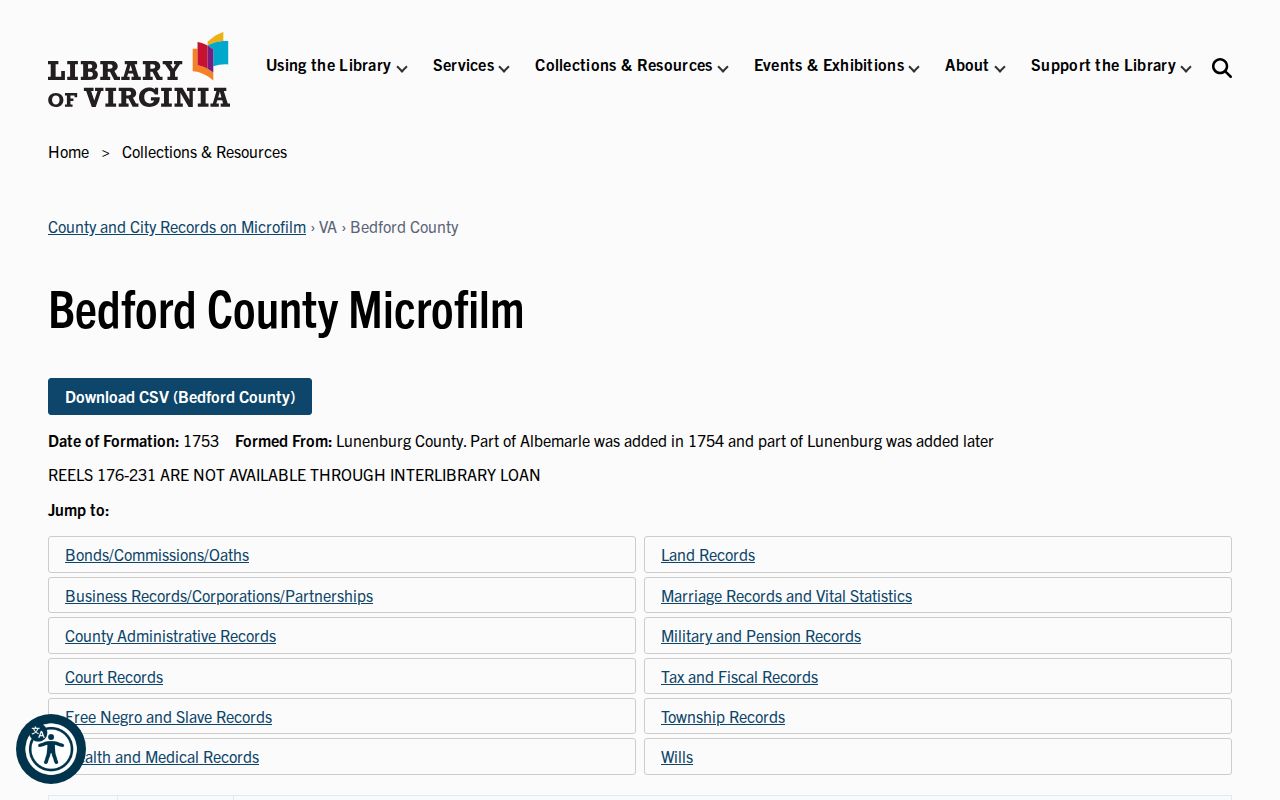
The finding aid moves each name from index to reel.
Walking a Bedford County Deed Chain Backward
Follow the names in the recorded instrument. Guesswork about occupants has no place here. A chain table keeps each step distinct and makes a gap or a changed legal description easy to spot.
| Transfer date | Grantor to grantee | Deed type | Book and page |
|---|---|---|---|
| Current instrument date | Current grantee to prior owner named by deed | Read from the recorded instrument | Copy the actual reference |
| Earlier recorded date | Prior grantor to that prior grantee | Read from the next deed | Copy the earlier reference |
| Next step back | Continue with the prior grantor as grantee | Check for estate or gift conveyance | Continue in index or book |
Treat this as a working method, not a story about a particular Bedford County parcel. Enter names and dates from the actual Clerk records. Watch for shifted acreage or boundaries. If a deed changes the tract, pause and confirm the land is still the same parcel before continuing.
- Search the current owner as grantee and copy the recorded reference.
- Read the grantor and land description in the deed image.
- Search the prior grantor as grantee to find the earlier deed.
- Repeat in the index, then move to courthouse books or microfilm if online results stop.
- Grantor
- The party who conveyed the interest.
- Grantee
- The party named to receive the interest.
- Chain of title
- The linked series of instruments used to trace prior transfers.
- Legal description
- The deed wording that identifies the tract more directly than a modern street address.
Bedford County Name Variants
Old Bedford County indexes hide owners behind initials, spelling shifts, married names and business styles. Search the reasonable variants. Test each hit before accepting it. The legal description, a spouse or co-owner, the date and neighboring tract names confirm a match. A common surname alone proves nothing.
Early Bedford deeds often place rural land by watercourse, road, adjoining owner and acreage rather than a street address. Town parcels use lot and block terms. Remember that a changed name or label can reflect the county seat's municipal history, not a different parcel.
Bedford County Probate Transfers
An estate can break a clean buyer-to-seller chain. Bedford Circuit Court's probate file may hold a will, an executor or administrator qualification, an order, an inventory or an executor deed. The file shows who had authority to move the land. The recorded deed or order ties that event to the legal parcel, and a will alone never replaces the land records.
A death record can pin down the event and date. Virginia vital certificates carry access limits. Birth certificates open after 100 years. Death, marriage and divorce certificates open after 25 years. Before then, certified copies go mainly to immediate family with valid ID. The VDH application asks for the record type, event details, requester relationship, identification and payment.
The VDH vital-records page charts the current access route.
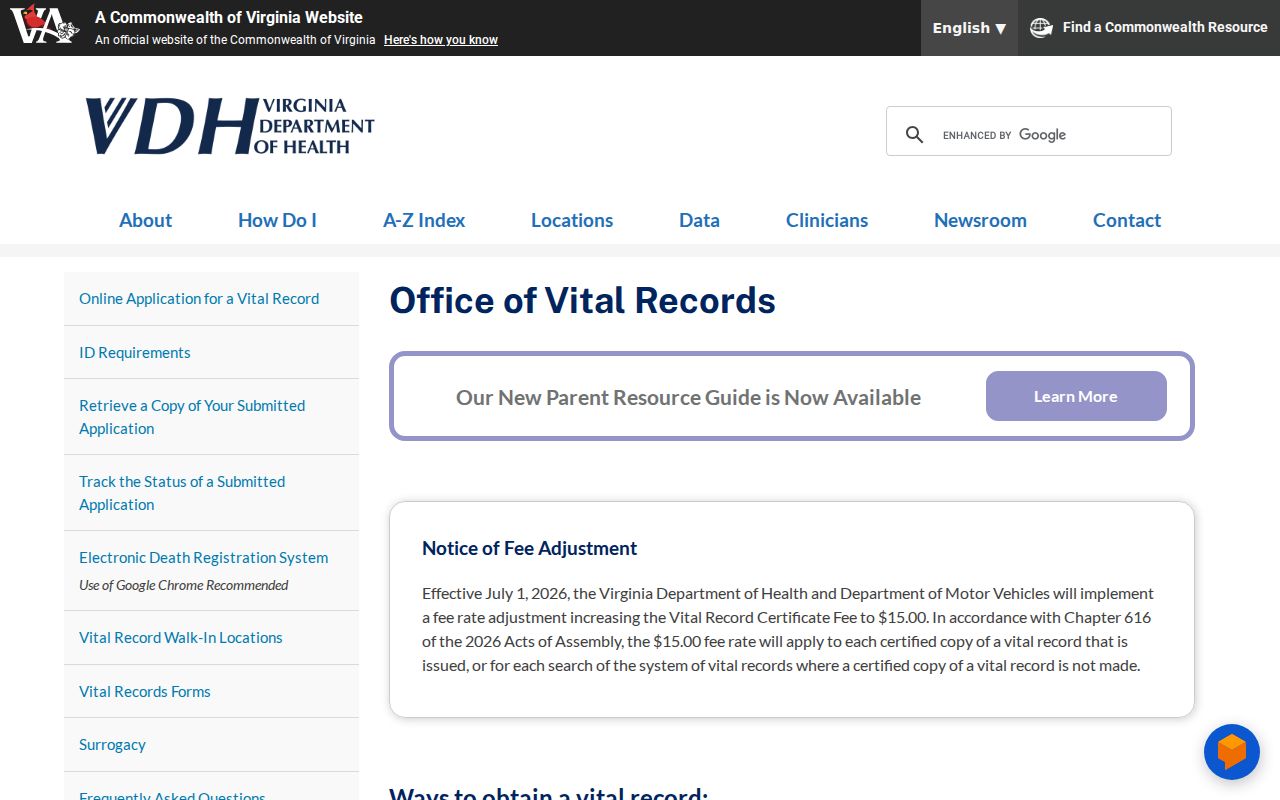
A vital record helps frame the family story, but confirm the land itself through probate and Bedford County deed records.
Bedford County City-Era Records
Bedford spent decades as an independent city. It held that status from 1968 until 2013, when it reverted to town status. Deeds, tax papers, directories, and newspapers from that era may label the place "City of Bedford." Parcel and land records now sit at the county level.
So search both wordings when an older index will not match a present address. The old label is only a crosswalk clue. It does not mean a separate current recorder exists. Confirm the land through the deed description and the map parcel. Town Planning can add zoning and building context. The Circuit Clerk holds recorded instruments for county and town property.
Bedford County House History Sources
The Bedford Public Library's special collections reach deep. They hold deeds and wills, plus Bedford County marriage records from 1754 to 1899. Surveyors' records run from 1754 to 1881. Census material, church minutes, slave records, and Bedford Bulletin newspapers round out the holdings. The Bedford Museum and Genealogical Library keeps local archives too. Once a deed chain establishes the land, these sources fill in occupants, dates, and neighborhood context.
A deed often hands you the next lead. Its road, tract, or adjoining-owner clues can drive searches through newspapers. Census records and church material help as well. The library publishes no dedicated obituary index or exact run of city directories on its official pages. So ask staff what it holds for a given year before treating a gap as proof. The Bedford Public Library Special Collections page describes these local research holdings.
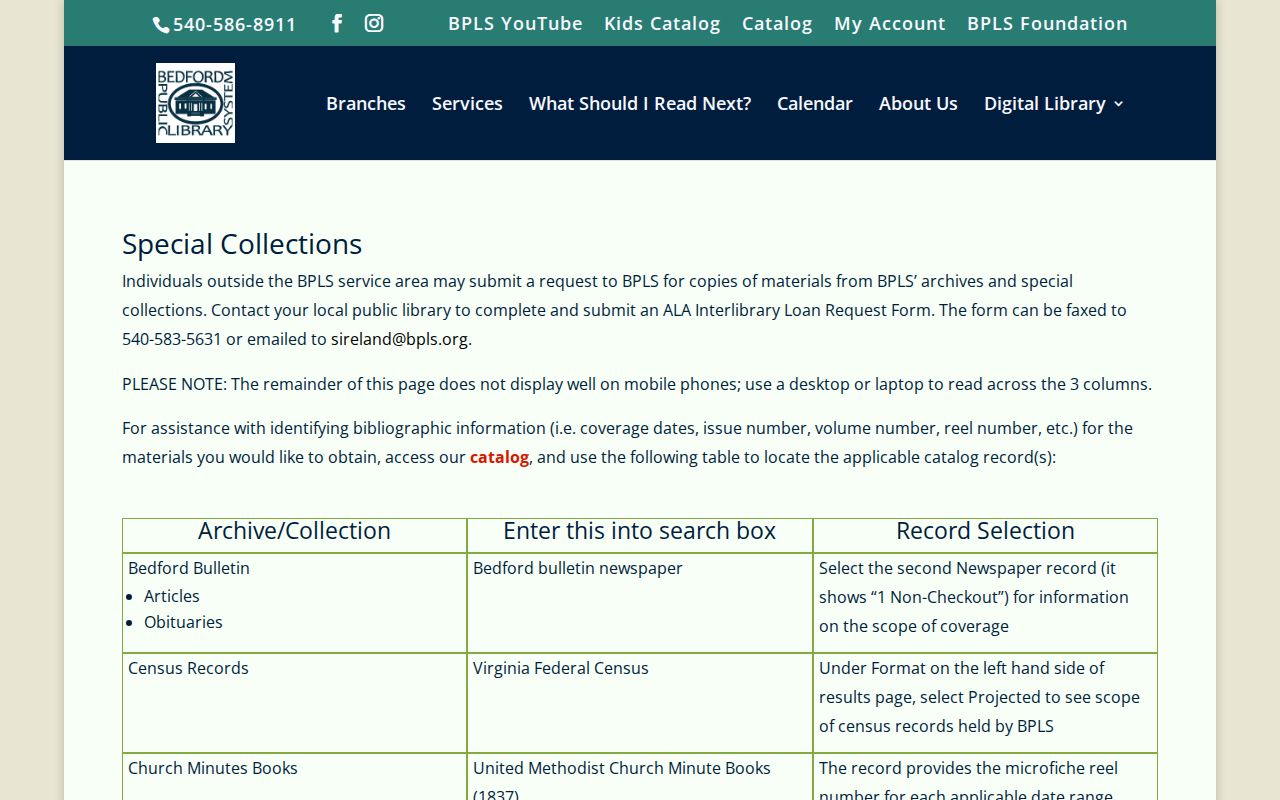
Local material can tie the deeded tract to the people who lived or worked on it.
How Far Bedford County Records Reach
Bedford County land records run deep. The courthouse trail reaches back to 1754. The Library of Virginia's local deed collection starts even earlier, with material dated 1751.
Microfilm indexes in the Library listing run through 1930, and the FamilySearch catalog's general index reaches 1929. Those figures describe historical access, not the reach of Bedford County's modern vendor index, which states no starting year. For old parcels and deeds, the archives matter most.
Lawful use. Former-owner research in Bedford County is for property diligence, title review and house history. Do not use a record trail to track, threaten or harass a living person.